A merchant ID, or MID, is the number your acquirer uses to recognise your business on every card payment you take. You don’t apply for it separately and you don’t choose it: it’s issued when your merchant account is opened. But it matters more than most merchants realise, especially in high-risk industries, because it’s the number your card volume, refunds and chargebacks are recorded against.
This guide explains what a merchant ID is, how it differs from a terminal ID and a merchant category code, where to find yours, and how to protect it.
Key takeaways
- A merchant ID (MID) is a unique number your acquirer assigns to your business when your merchant account is opened.
- It identifies who is being paid. The terminal ID identifies which device or checkout took the payment, and the merchant category code (MCC) identifies what kind of business you are.
- You’ll find your MID on your merchant statement, in your provider’s online portal, or by asking your provider.
- Many businesses hold more than one MID, for example one per brand, website or currency. Splitting volume across MIDs to hide a high chargeback ratio is a different thing, and card schemes treat it as a serious breach.
- If your merchant account is closed, the MID goes with it, so protecting the account is what protects the MID.
What is a merchant ID?
A merchant identification number is the code that identifies your business inside the card payment system. When you open a merchant account, the acquiring bank or the payment processor acting for it creates a merchant record for you and gives it a MID. From then on, every authorisation, settlement, refund and chargeback on that account carries that number.
Think of it as your business’s account reference with the card networks. Your bank account number tells your bank where your money sits. Your MID tells the acquirer, and through it Visa and Mastercard, which merchant a card payment belongs to.
You’ll see it called different names depending on the provider: merchant ID, MID, merchant number or merchant identification number. They all refer to the same thing.
How a merchant ID works in a card payment
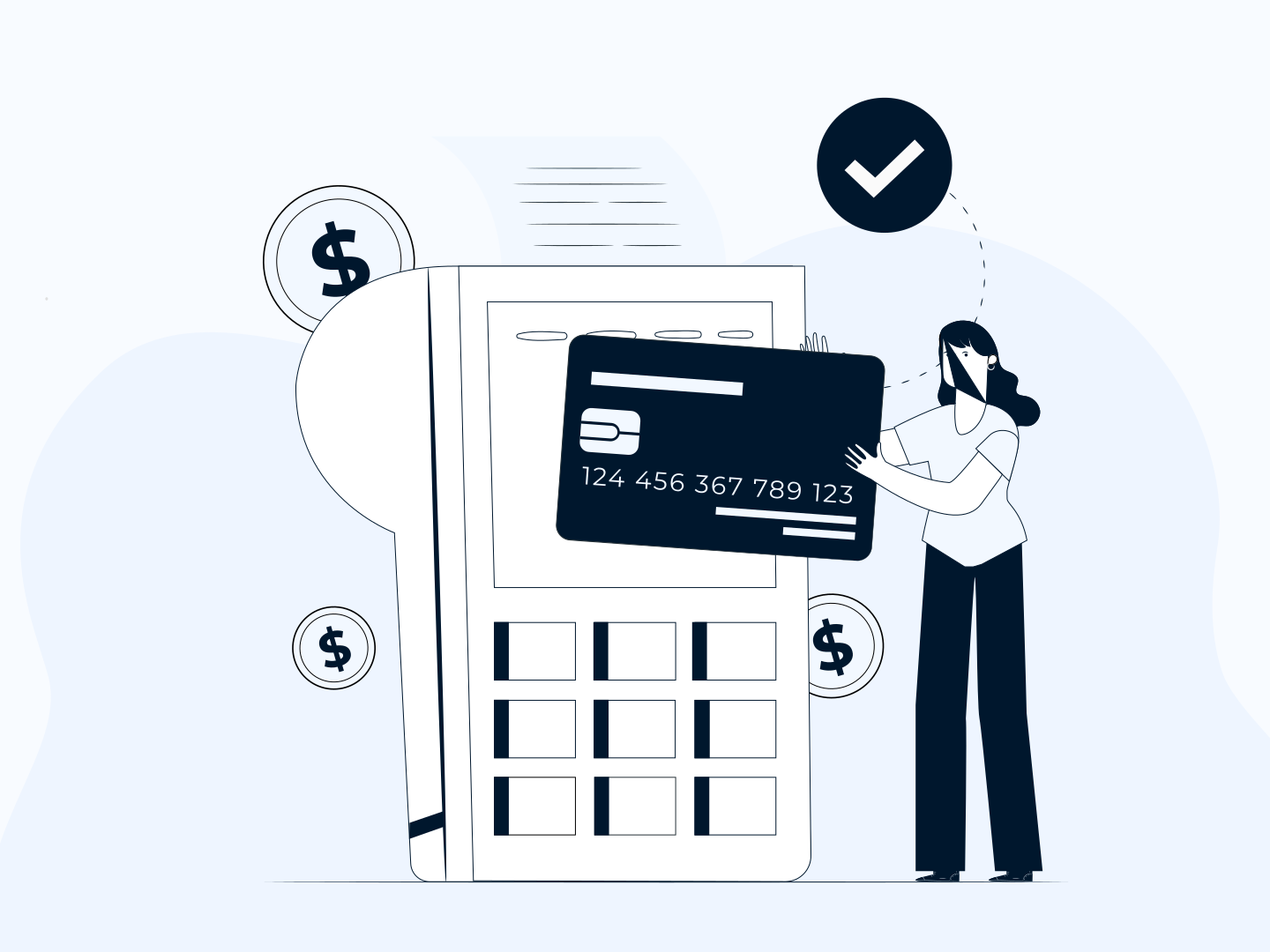
Here’s what happens, in simple terms, when a customer pays you by card:
- The customer enters their card details at your checkout or taps their card on your terminal.
- Your payment gateway or terminal sends the payment to your acquirer, together with your merchant ID, your terminal ID and your merchant category code.
- The acquirer passes the request through the card network to the customer’s bank (the issuer), which approves or declines it.
- Approved payments are settled to the merchant account linked to your MID, and then paid out to your business bank account.
The MID is what ties each step back to you. It’s how the acquirer knows whose money it’s settling, whose refund it’s processing and whose chargeback has just arrived.
In the ISO 8583 message standard that most card authorisations use, the merchant ID travels in the “card acceptor identification code” field, which holds up to 15 characters, and the terminal ID in a separate 8-character field. That’s why many MIDs are 15 digits long, but not all are: acquirers use their own formats, and shorter MIDs are common.
Merchant ID vs terminal ID vs MCC
These three numbers travel together on every card payment and are easy to mix up.
| Merchant ID (MID) | Terminal ID (TID) | Merchant category code (MCC) | |
|---|---|---|---|
| What it identifies | Your business, as a merchant | A specific terminal, till or online checkout | The type of business you run |
| Who sets it | Your acquirer or processor | Your acquirer or processor | Your acquirer, based on your business activity |
| How many you have | One per merchant account | Often several under one MID | Usually one per MID |
| Typical format | Varies by acquirer, often up to 15 characters | 8 characters | 4 digits |
| Why it matters to you | Your volume, refunds and chargebacks are recorded against it | Helps you reconcile payments by location or channel | Affects fees, risk classification and which issuers decline you |
The MCC deserves its own explanation, because it has a big effect on high-risk merchants. Our guide to MCC codes covers how they’re assigned and includes the full list.
Merchant ID, transaction ID and other numbers that look similar
Several other identifiers show up on statements and in payment dashboards. None of them replaces your MID:
- Merchant transaction ID or order ID: a reference for one single payment, created by your shop or your gateway. Every transaction has its own. Your MID stays the same across all of them.
- Payment platform account ID: if you use a payment facilitator or an all-in-one platform, the account ID in its dashboard is the platform’s own reference for you. The acquirer-level merchant ID may sit behind it, so ask the platform if a bank or partner needs that number.
- BIN: the first digits of a card number. It identifies the bank that issued the customer’s card, not your business.
How to get a merchant ID
You get a MID by opening a merchant account. There’s no separate application for it.
- Choose a payment processor or acquirer that accepts your industry. For high-risk businesses, that means a provider that actually works with your vertical, not one that may close the account once your sales start.
- Apply for a merchant account. Expect to provide company documents, details of the owners, your website, your refund and delivery policies, and processing history if you have any.
- Pass underwriting. The provider checks your business and your risk profile, and assigns your MCC.
- Receive your MID. It’s issued when the account is set up, along with any terminal IDs and your login details for the merchant portal.
If you’re in a high-risk vertical, our guide to getting approved for a high-risk merchant account walks through what underwriters look for.
We always require businesses to have a cash flow forecast. If a company doesn’t have that, it’s a red flag that they might not be ready to proceed with the rest of the process of setting up a high-risk merchant account. At the very least, you should understand your expenses as you prepare to set up payment processing solutions and fully launch your business.
Dennis E.R. Pedersen, CEO and Founder of FastoPayments

How to find your merchant ID number
There’s no public directory you can search for a MID, so look in your own records:
- Your merchant statement: the MID is usually printed near the top, labelled “Merchant ID”, “MID” or “Merchant number”.
- Your provider’s online portal: look under account, profile or business settings.
- Your card terminal: many terminals show the MID in their settings menu or print it on receipts and end-of-day reports.
- Your welcome email or contract: providers often include the MID in the account set-up confirmation.
- Your provider’s support team: they’ll confirm it once they’ve verified who you are.
Treat your MID like other account details. It isn’t as sensitive as a password or a card number, but there’s no reason to publish it, and you should only share it with your provider and partners who genuinely need it.
Can you have more than one merchant ID?
Yes, and plenty of businesses do. Common, legitimate reasons include:
- Separate brands or websites, so each one has its own descriptor and its own reporting.
- Separate legal entities, since each company needs its own merchant account.
- Different currencies or regions, where a provider sets up accounts per settlement currency.
- Different business lines with different MCCs, for example subscriptions and one-off sales.
- A backup processor, so you can keep taking payments if one route goes down.
What isn’t allowed: splitting volume to hide chargebacks
Spreading the same business across several MIDs purely to keep each one below a chargeback or fraud monitoring threshold is known as load balancing. Card schemes treat altering a merchant’s data or performance to get around their monitoring programmes as a serious violation, with penalties for the acquirer and possible permanent disqualification for the merchant and its owners. If your chargeback ratio is the problem, fix the causes rather than spreading them out. Our guide on how to prevent chargebacks is a good place to start.
What happens if your merchant ID is closed?
A MID only exists as long as the merchant account behind it. If the provider closes the account, the MID stops working and you can no longer take card payments through it. Common reasons for closure include:
- a chargeback or fraud ratio that stays above the provider’s or the card schemes’ limits
- selling products or services the provider didn’t approve, or that its acquiring bank doesn’t accept
- a sudden change in volume, average order value or customer countries that wasn’t agreed in advance
- missing documents or unanswered compliance requests
Closures for serious reasons can also lead to a listing on Mastercard’s MATCH list, which makes it much harder to open a new merchant account anywhere. Our guide to the MATCH list and TMF explains how that works and what you can do about it.
Switching providers is different. If you move to a new processor, you get a new MID with the new merchant account, and your old one is closed in the normal way.
How to protect your merchant ID
- Keep your chargebacks low. Clear product descriptions, a recognisable billing descriptor, an easy refund process and fast customer service prevent most disputes before they start. Our guide to chargebacks explains how disputes work.
- Stop fraud early. Use 3D Secure, address and card verification, and fraud screening, especially for card-not-present sales.
- Tell your provider before things change. New products, new markets or a big jump in volume should be agreed first, not discovered in a monitoring report.
- Keep records. Proof of delivery, customer communication and terms accepted at checkout are what win disputes.
- Work with a provider that understands your vertical. A high-risk specialist expects your risk profile and is less likely to close your account as soon as it grows.
Merchant IDs for high-risk businesses
For adult, gaming, dating, nutraceuticals, subscription and hospitality businesses, the MID is where your risk history builds up. A clean record on one MID helps you negotiate better terms and add new MIDs later. A closed MID with a high chargeback ratio follows you into your next application.
That’s why the provider matters as much as the number. A high-risk merchant account from a provider that accepts your vertical, connected through a high-risk payment gateway, gives you a MID that’s set up correctly from day one: the right MCC, the right descriptor and monitoring that warns you before a threshold becomes a problem.
Frequently asked questions
What is a merchant ID number?
A merchant ID number (MID) is a unique code that your acquirer or payment processor assigns to your business when your merchant account is opened. It identifies your business on every card payment, refund and chargeback processed through that account.
How do I find my merchant ID?
Check your merchant statement, where it’s usually printed near the top, or your provider’s online portal under account settings. Many card terminals also show it in their settings or on receipts. If you can’t find it, ask your provider’s support team.
How many digits is a merchant ID?
It depends on the acquirer. The field used for the merchant ID in card payment messages holds up to 15 characters, so 15-digit MIDs are common, but many acquirers issue shorter ones.
Is a merchant ID the same as a terminal ID?
No. The merchant ID identifies your business, while a terminal ID identifies a specific card terminal, till or online checkout. One merchant ID often has several terminal IDs under it.
Can a business have more than one merchant ID?
Yes. Businesses often hold separate MIDs for different brands, websites, legal entities, currencies or business lines. What card schemes don’t allow is splitting the same business across MIDs to hide a high chargeback or fraud ratio.
Do I need to apply for a merchant ID separately?
No. You receive a merchant ID automatically when your merchant account is approved and set up. There’s no separate application.
What happens to my merchant ID if my merchant account is closed?
The MID stops working when the merchant account behind it is closed. If you open an account with a new provider, you’ll get a new MID.
Next step
If you run a high-risk business and need a merchant account that’s set up properly from the start, FastoPayments works with adult, gaming, dating, nutraceuticals, subscription and hospitality merchants. Approval usually takes two to three weeks from a complete application. Get your free quote.