
Stripe vs Adyen (2026): Which Payment Processor Is Right for Your Business?
A no-nonsense breakdown of pricing, features, and limitations. Plus: what to do when neither payment platform accepts your industry.
Last updated: May 2026 · 12 min read
TL;DR: Stripe vs Adyen in 2026 (and Where Fasto Fits)
Choosing between Stripe and Adyen feels a bit like choosing between two excellent sports cars. Both will get you where you need to go, and both look impressive. But neither is built for off-road terrain.
- Stripe is best for startups and SMBs in low-risk verticals that want fast onboarding and developer-friendly tools.
- Adyen is better suited for large omnichannel enterprises with high volumes and complex global operations.
- FastoPayments is built for high-risk verticals like adult, CBD, gambling, crypto, travel, and forex, where Stripe and Adyen will say no.
What's Inside
- Who Are Stripe, Adyen, and Fasto?
- Stripe: Features and Overview
- Adyen: Features and Overview
- Key Differences That Actually Matter
- Pricing and Fee Comparison
- Features and Capabilities
- High-Risk Industry Support
- Real-World Scenarios
- How to Decide: A Simple Framework
- Full Three-Way Comparison
- The Verdict
- Frequently Asked Questions
Stripe and Adyen are two of the most recognized names in payment processing. Stripe's 2024 total payment volume crossed roughly $1.4 trillion with 38% year-over-year growth. Adyen processed over 1.29 trillion EUR in the same period with EBITDA margins near 50%. Both are massive payment service providers enabling businesses worldwide.
But here is what most comparison guides will not tell you: both platforms are built for low-risk, mainstream businesses. Post 2023-2024 regulatory crackdowns in crypto, BNPL, and online gambling have made mainstream PSPs even more conservative with underwriting. If your company operates in adult entertainment, CBD, gambling, crypto, nutraceuticals, dating, travel, vape, or any other high-risk vertical, neither Stripe nor Adyen will accept you. And if they do onboard you by mistake, you risk sudden account freezes, held funds, and termination with zero warning.
This guide gives you a fair, factual comparison of both platforms, then shows you exactly where to go when neither option fits.
Who Are Stripe, Adyen, and Fasto in 2026?
Stripe
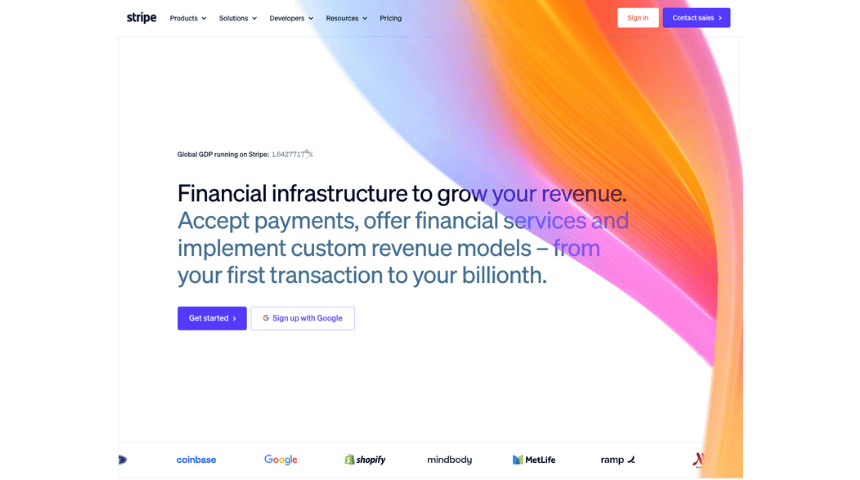
Founded in 2010 in Ireland and the US, Stripe now operates in 45+ countries supporting 135+ currencies. Core products include Stripe Payments, Stripe Billing, Connect, Radar, Issuing, and Terminal. According to company announcements reported by The Information and FT in 2024, Stripe processed about $1.4 trillion in total payment volume with full-year profitability finally achieved. The platform appeals strongly to SaaS companies, online businesses, and digital-first SMBs who value its developer-centric approach.
Adyen
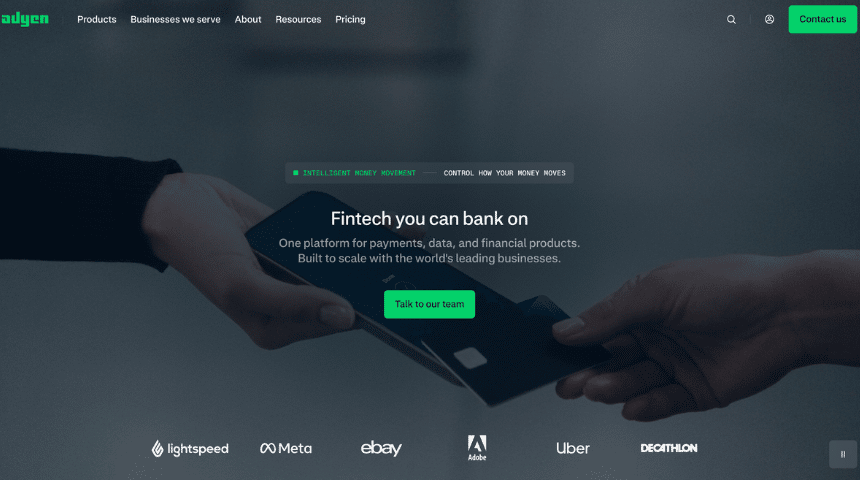
Founded in 2006 in Amsterdam and public on Euronext since 2018, Adyen processed roughly 1.29 trillion EUR in 2024 with around 4,000 employees. Its single payment infrastructure handles online, in-app, and in-store payments with unified data. Enterprise clients like Uber, Spotify, eBay, H&M, and McDonald's rely on Adyen for their complete payments platform needs.
FastoPayments
Fasto takes a different path entirely. As a B2B PSP specializing exclusively in high-risk and regulated verticals, Fasto serves merchants in adult content, CBD and hemp, nutraceuticals, gaming and betting, travel, crypto, and forex. Key offerings include high-risk merchant accounts with multiple acquiring banks, a payment gateway supporting cards, local payment methods, and crypto, plus chargeback protection and fraud tools tuned for above-average dispute ratios. While Stripe and Adyen optimize for "average" risk, Fasto's entire underwriting and risk management model is built for above-average risk by design.
Stripe: Features and Overview
Stripe has become the default choice for developers and digital businesses that do not touch restricted content or products. Think of Stripe as a beautifully designed motorway, as long as you drive the kind of car they like.
Stripe's Key Features
Global payments: 135+ currencies with local acquiring in key markets. Support for Apple Pay, Google Pay, Link, Alipay, and WeChat Pay in some regions.
Revenue tools: Stripe Billing for recurring payments and subscriptions, Tax for automated calculation, and Revenue Recognition for ASC 606 compliance.
Developer and platform tools: Connect for marketplaces with split payouts, Issuing for virtual and physical cards, and Terminal for in-person payments.
Fraud and compliance: Stripe Radar with machine learning risk scores. SCA support in Europe handles 3D Secure and PSD2 requirements.
Stripe Advantages and Disadvantages
- Fast, almost instant onboarding for low-risk merchants
- Excellent developer experience and documentation
- Wide ecosystem of integrations (Shopify, WooCommerce, Xero)
- Very strong global reliability and improving conversion rates
- No monthly fees on standard plan
- Strict prohibited business list (adult, CBD, gambling, financial products)
- Risk of sudden holds or terminations if dispute ratios spike
- Flat-rate pricing expensive at scale vs interchange++ models
- Limited custom risk tuning for higher chargeback baselines
- No phone support for standard merchants
Stripe Pricing and Typical Costs
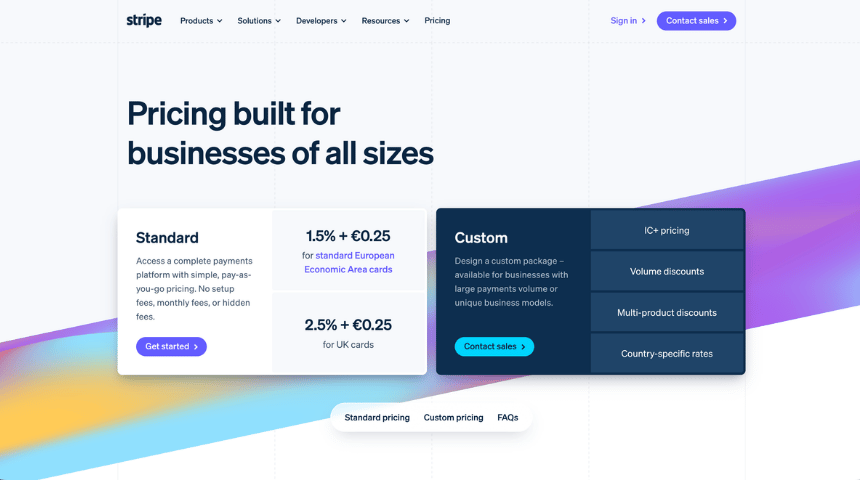
Stripe's flat-rate pricing model is straightforward. For the EU/EEA, standard online card fees are 1.5% + 0.25 EUR per transaction. UK cards run at 2.5% + 0.25 EUR. International cards add another 1.5%, and currency conversion adds 1% on top. No monthly fees exist by default, but optional add-ons like Radar for Fraud Teams add costs. Chargeback fees hit roughly 15 EUR per dispute.
To put that in perspective: if you process 200,000 EUR monthly at 1.5% + 0.25 EUR with 2,000 transactions, you are paying roughly 3,500 EUR in processing fees alone, plus 15 EUR per dispute on top. Stripe's flat-rate model becomes expensive at scale compared with interchange++ models. Custom pricing options exist for larger merchants, but those deals remain private.
Critically, Stripe does not "price for" high-risk merchants. It simply refuses or shuts them down. That is a different kind of cost entirely.
Common pattern: Many CBD merchants report the same story on Reddit and Trustpilot. They start fine on Stripe, grow quickly, then wake up to a "we can no longer support your business" email.
Adyen: Features and Overview
If Stripe is the favourite tool of fast-moving startups, Adyen is the industrial-grade machinery running in the basement of global retailers. Adyen positions itself as an enterprise-first unified commerce payment platform, originally built around European acquiring but now truly global.
Adyen's Key Features
Single platform architecture: Gateway, risk, and acquiring together. Fewer third parties means faster troubleshooting and unified payment flows.
Omnichannel capability: Payment terminals, mobile POS, and online checkouts on the same system. Features like buy-online-return-in-store and consistent customer tokens enable complex payment needs.
Local payment methods: Strong support for European options like iDEAL, Bancontact, Sofort, plus local card networks in LATAM and APAC. Over 250+ payment methods across 200+ markets.
Risk engine: RevenueProtect with configurable rules plus machine learning. Adyen Uplift helps enterprises tune risk strategies market by market. Network Token Optimisation and intelligent retries improve authorization rates.
Adyen Advantages and Disadvantages
- Exceptional for omnichannel retailers (stores + eCommerce)
- High authorization rates with direct card scheme connections
- Unified reporting across regions and channels
- Enterprise-grade customer support
- Interchange++ pricing transparent at scale
- Onboarding can take days or weeks (sales process required)
- Pricing complex and hard to forecast for smaller merchants
- Monthly minimum invoice (~1,000 EUR)
- Conservative with high-risk verticals (like Stripe)
- Less developer-friendly than Stripe for quick integrations
Stripe vs Adyen: Key Differences That Actually Matter
On paper the feature lists look similar, but in practice the differences in ideal customer, risk appetite, and pricing structure matter far more. Choosing between Stripe and Adyen is less like picking Coke vs Pepsi and more like choosing between a Swiss Army knife and a full tool chest.
Integration, Developer Experience, and Onboarding
Stripe offers very fast self-service signup for most low-risk businesses. Clean documentation, extensive code samples, and sandbox environments work without heavy sales involvement. REST APIs, SDKs for JavaScript, PHP, Python, Ruby, Java, and mobile make Stripe ideal for tech-savvy companies. Prebuilt UI components like Checkout and Payment Element mean a small DTC brand can go live in a single weekend.
Adyen requires contact with sales, business case review, and test accounts before going live. Onboarding can take days or weeks instead of minutes. The API and SDKs are enterprise-grade and reliable, but the learning curve is steeper. Documentation is thorough but oriented toward merchants with dedicated engineering teams.
Fasto deliberately invests more human time in onboarding high-risk merchants. More KYC, KYB, and compliance work exists, but it is structured to get approvals rather than instant rejections. Fasto offers API docs and plugins for WooCommerce, Magento, or custom PHP/Node but pairs them with dedicated onboarding managers. For a CBD subscription brand or adult cam site, Stripe's instant setup is often followed by instant shutdown, which is where Fasto's hands-on approach becomes practical.
Pricing and Fee Comparison
Adyen Pricing and Typical Costs
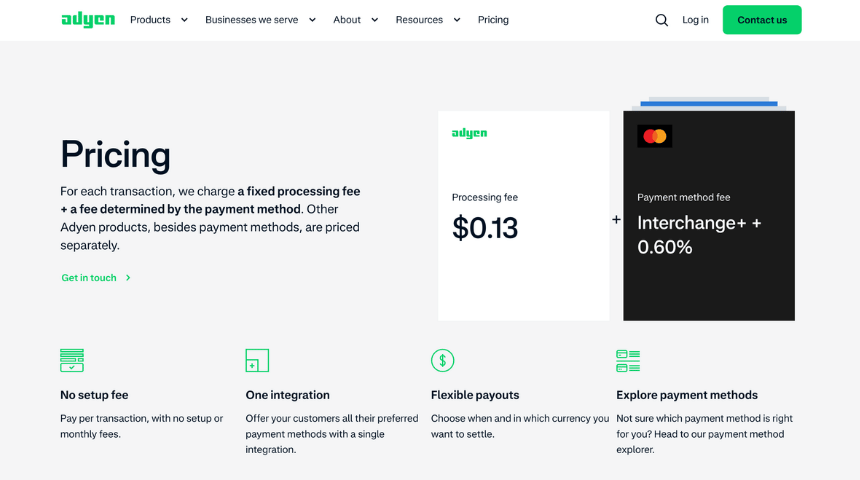
Adyen uses interchange++ pricing: a fixed processing fee around 0.11 EUR per transaction plus scheme fee plus interchange cost. This varies by card type, region, and payment method, making fee forecasting more complex than Stripe's flat rate.
Minimum monthly invoice requirements may apply (often around 1,000 EUR or more). Advanced risk or authentication products have separate pricing. Chargeback fees range from 5 EUR to 25 EUR depending on network and region.
A retailer doing 50 million EUR annually in Europe will likely save with Adyen's interchange++ compared with Stripe's flat rate. A 30,000 EUR per month Shopify online store might just get confused by the complexity. Think of onboarding Adyen like applying for a corporate credit card, not signing up for Netflix. It takes a bit.
Three-Way Pricing Comparison
| Pricing | Stripe | Adyen | FastoPayments |
|---|---|---|---|
| Pricing model | Flat-rate (pay-as-you-go) | Interchange++ (cost-plus) | Custom (tailored to risk profile) |
| EEA card rate | 1.5% + 0.25 EUR | Interchange + scheme + ~0.6% + 0.11 EUR | Custom per vertical |
| UK card rate | 2.5% + 0.25 EUR | Interchange++ (varies by card type) | Custom per vertical |
| International card surcharge | +1.5% | Included in interchange (varies) | Included in package |
| Currency conversion fee | +1% | ~0.3-0.8% FX markup | Competitive FX rates |
| Setup fee | None | None (enterprise contracts may apply) | None |
| Monthly minimum | None | ~1,000 EUR invoice minimum | None |
| Chargeback fee | 15 EUR | 25 EUR | Built into chargeback management |
| Volume discounts | Custom (100K+ EUR/month) | Custom (negotiated per contract) | Scales with processing volume |
The hidden cost of chargebacks: LexisNexis Risk Solutions estimates the true cost of a chargeback reaches 2-3x the transaction value once operational costs are included. A high-risk merchant at 1-2% chargeback ratio versus a low-risk merchant at 0.1% faces dramatically different economics. Mainstream PSPs treat high chargeback rates as a reason to exit the relationship. Specialists like Fasto treat them as a problem to manage and optimize.
Features and Capabilities
| Feature | Stripe | Adyen | FastoPayments |
|---|---|---|---|
| Self-service signup | ✓ Instant | ✗ Sales process required | ✓ Fast-track onboarding |
| API quality | Industry-leading, developer-first | Enterprise-grade, steeper learning curve | API + plugins (WooCommerce, Magento) |
| Recurring billing | ✓ Stripe Billing (+0.7%) | ✓ Built-in tokenization | ✓ Subscription support |
| POS / in-store | ✓ Stripe Terminal | ✓ Enterprise POS | ✓ MPOS and POS terminals |
| Omnichannel | ● Partial | ✓ Native unified commerce | ✓ Online + in-store |
| Fraud protection | Stripe Radar (ML, add-on fee) | RevenueProtect (ML, included) | 3DS, device fingerprinting, velocity rules |
| Chargeback prevention | Basic (Radar) | RevenueProtect rules | Alerts, deflection, representment |
| Global acquiring licenses | Relies on banking partners | Own licenses in 40+ countries | Multiple acquiring bank partners |
| Payment methods | 100+ | 250+ | Cards, wallets, SEPA, crypto |
| Crypto payments | ✗ Very limited | ✗ Not supported | ✓ Where legally allowed |
| Dedicated account manager | ✗ Enterprise only | ✓ For qualifying merchants | ✓ All merchants |
| 24/7 support | ✗ Email/chat only | Enterprise accounts only | ✓ WhatsApp, chat, email |
High-Risk Industry Support: Where Both Fail
This is the section that matters most if you are reading this comparison because your business does not fit neatly into mainstream categories.
Mainstream PSPs are optimized around portfolio-wide risk metrics, regulatory pressure from card schemes, and investor expectations. This pushes them to de-risk rather than deeply manage edge cases. After major fines in the 2010s and 2020s, large acquirers tightened acceptance criteria. The Financial Times and Reuters documented 2022-2025 waves of de-risking activity where major banks quietly exited crypto exchanges, adult subscription platforms, and nutraceutical trial offer models.
Concrete pain points for high-risk merchants include: account approval followed by sudden termination after risk review, frozen settlements for weeks while investigations run, refusal to underwrite industries on internal prohibited lists regardless of individual controls, and little flexibility on chargeback thresholds defined by Visa's VFMP or Mastercard's Excessive Chargeback Programme.
Critical: Both Stripe and Adyen actively decline or terminate merchants in high-risk industries. If your business falls into any of the categories below, neither platform is a viable long-term option.
| Industry | Stripe | Adyen | FastoPayments |
|---|---|---|---|
| Adult entertainment | ✗ Prohibited | ✗ Not accepted | ✓ Specialist |
| CBD / hemp | ✗ Prohibited | ✗ Not accepted | ✓ Supported |
| Online gambling / casino | ✗ Prohibited | ● Licensed only, enterprise | ✓ Licensed operators |
| Cryptocurrency | ● Very limited | ✗ Not supported | ✓ Supported |
| Nutraceuticals / supplements | ✗ High risk of termination | ✗ Typically declined | ✓ Supported |
| Online dating | ● Restrictive | ● Case-by-case | ✓ Specialist |
| Vape / e-cigarettes | ✗ Prohibited | ✗ Not accepted | ✓ Supported |
| Travel / hospitality | ● Limited | ✓ Supported at scale | ✓ Supported |
| Forex / trading | ✗ Prohibited | ✗ Generally declined | ✓ Supported (licensed) |
| Subscription / recurring | ✓ Supported | ✓ Supported | ✓ Supported |
In short: Stripe and Adyen try not to get dirty. Fasto shows up in work boots with a mop and a compliance manual.
How Fasto Outperforms Stripe and Adyen for High-Risk Payment Processing
For merchants who already know mainstream PSPs are not a fit, Fasto offers an alternative path built specifically for challenging verticals.
Specialised high-risk merchant accounts come with multiple acquiring partners able to board adult, CBD, gaming, travel, crypto, and forex where Stripe and Adyen routinely decline. Custom risk profiles per merchant replace one-size-fits-all approaches.
Fraud prevention uses device fingerprinting, velocity rules, 3D Secure routing, and behaviour-based scoring tuned for known patterns in adult, gambling, or trial offers. The goal is reducing both true fraud and friendly fraud while keeping conversion healthy.
Chargeback protection includes alerts (similar to Ethoca and Verifi), auto-refund flows to prevent disputes, and fully managed representment. Fasto expects chargebacks in high-risk sectors and designs both pricing and operations around them.
Payment methods support cards, SEPA and local bank transfers, multi-currency settlement options, and crypto payments where legally allowed. A merchant in Cyprus can sell to Canada, the UK, and Brazil using appropriate local methods.
Compliance treats KYC/AML, transaction monitoring, and SCA as competitive advantages. FATF guidance and European Banking Authority papers emphasise proportionate, risk-based approaches rather than blanket de-risking. Fasto's underwriting models examine business behaviour, refund policies, and marketing practices, not just a Merchant Category Code label.
Rejected by Stripe or Adyen?
You are not alone. Over 500 businesses trust FastoPayments to process payments in verticals that mainstream processors refuse. Get a merchant account built for your industry.
Get Your Free Quote Or talk to our teamReal-World Scenarios: Who Should Use What?
Small SaaS in the UK
A founder builds productivity software processing under 50K GBP monthly with minimal disputes. Stripe is perfect with its fast setup and low-risk profile. Fasto is not needed here.
Global Fashion Chain
Stores in 15 countries with tens of millions in turnover. Adyen provides unified commerce and terminals across multiple markets. Stripe might handle a side project but not core retail payments.
CBD Subscription Box in Germany
Stripe either refuses or shuts them down after risk review. Adyen is hard to access given size and risk profile. Fasto onboards with high-risk merchant accounts, anti-fraud rules, and chargeback alerts.
Adult Live Streaming Platform
Users across North America and Europe. Stripe and Adyen are effectively unavailable. Fasto sets up multiple acquirers, local EU payment methods, and optional crypto. Flexible routing keeps the merchant live.
Pro tip: Many larger merchants use payment orchestration with both Stripe and Adyen in parallel, adding Fasto as their high-risk rail for specific products behind a unified checkout layer.
How to Decide: A Simple Framework
Identify your risk profile
Is your vertical on common prohibited lists? Adult, CBD, nutraceuticals, gambling, forex, crypto, travel packages? If yes, lean strongly towards Fasto.
Assess channel complexity and size
Online-only processing under 10 million EUR annually in low-risk goods? Stripe is often optimal. Ten or more stores plus multiple regions? Evaluate Adyen.
Map your operational risk
Expect disputes from subscriptions, free trials, digital content, or travel? Consider Fasto's built-in chargeback management that treats disputes as a problem to manage, not a reason to terminate.
Consider your technical resources
Want maximum control with developers? Both Stripe and Adyen work well. Want API flexibility plus hands-on support? Fasto teams actively guide merchants through technical and compliance setup.
Full Three-Way Comparison
| Category | Stripe | Adyen | FastoPayments |
|---|---|---|---|
| Best for | Startups, SaaS, low-risk eCommerce | Enterprise, omnichannel, global retail | High-risk, cross-border, regulated industries |
| Founded | 2010 (Ireland/US) | 2006 (Amsterdam) | 2018 (Estonia) |
| Pricing model | Flat-rate | Interchange++ | Custom per risk profile |
| Onboarding speed | Minutes (self-service) | Days to weeks (sales process) | Fast-track with compliance support |
| High-risk acceptance | ✗ No | ✗ No | ✓ Core focus |
| Chargeback management | Basic (Radar) | RevenueProtect | Alerts + deflection + representment |
| Dedicated account manager | Enterprise only | Enterprise accounts | ✓ All merchants |
| Multi-currency | ✓ 135+ | ✓ 150+ | ✓ Multi-currency settlement |
| Crypto payments | ✗ | ✗ | ✓ Where legally allowed |
| POS terminals | ✓ | ✓ | ✓ |
| 24/7 support | ✗ | Enterprise only | ✓ All merchants |
| Account stability | Known for sudden freezes | Stable for qualifying merchants | Built for high-risk stability |
The Verdict: When to Choose Which
Stripe and Adyen are outstanding at what they were built for: large-scale, mostly low and medium-risk payment processing for mainstream commerce. Regulation, scheme rules, and portfolio risk push them away from true high-risk sectors.
Fasto is not trying to be a clone of Stripe or Adyen. Instead, it serves as the specialist partner for merchants at the edge of what banks feel comfortable with. Payments should feel like infrastructure, not like a horror film with surprise plot twists.
Stripe
Best for
Startups, SaaS, and low-risk eCommerce that want instant signup, clean APIs, and simple pricing. Ideal under 1M EUR/year in mainstream products online.
Adyen
Best for
Enterprise businesses with global operations, omnichannel retail, and 1M+ EUR annual volume. Best for unified in-store and online payments with Interchange++ cost transparency.
FastoPayments
Best for high-risk businesses
Any business in adult, CBD, gambling, crypto, nutraceuticals, dating, vape, travel, or forex. Built for industries that Stripe and Adyen reject, with dedicated support, chargeback prevention, and account stability.
Ready to Stop Worrying About Account Freezes?
If you are in a high-risk vertical, choose your PSP like you would choose a co-founder. Join 500+ businesses that trust FastoPayments with their payment processing.
Apply Now Contact our teamFrequently Asked Questions
Is Stripe or Adyen better for small businesses?
Stripe is better for small businesses and startups. It offers instant self-service signup, no monthly minimums, and flat-rate pricing at 1.5% + 0.25 EUR per EEA transaction. Adyen targets enterprise merchants and typically requires minimum monthly invoice amounts around 1,000 EUR or more.
Can Stripe or Adyen process payments for high-risk industries?
Neither Stripe nor Adyen is suitable for high-risk industries. Stripe explicitly prohibits adult content, CBD, gambling, and cryptocurrency in its terms of service. Adyen is similarly conservative. Businesses in these industries should work with a specialist processor like FastoPayments.
What is the difference between Stripe and Adyen pricing?
Stripe uses simple flat-rate pricing (1.5% + 0.25 EUR for EEA cards). Adyen uses Interchange++ pricing where you see the actual interchange fee, scheme fee, and Adyen's markup separately (typically around 0.11 EUR per transaction plus approximately 0.6%). Adyen can be cheaper at high volumes but is more complex to predict.
Which processor has better global coverage?
Adyen has broader global acquiring coverage with its own licenses in 40+ countries and support for 150+ currencies. Stripe operates in 46+ countries but relies more on banking partners for acquiring. For large-scale international operations, Adyen generally provides stronger infrastructure.
Why do Stripe and Adyen struggle with high-risk merchants?
Mainstream PSPs are optimized around portfolio-wide risk metrics, regulatory pressure from card schemes like Visa and Mastercard, and investor expectations. This pushes them to de-risk rather than manage complex cases. Specialists like FastoPayments partner with acquirers and banks that explicitly want to serve complex verticals within KYC, AML, and SCA boundaries.
Can I use Stripe and Adyen together with a high-risk processor?
Yes. Many larger merchants use payment orchestration platforms to route low-risk transactions through Stripe or Adyen while sending high-risk flows through a specialist like FastoPayments. This provides redundancy and ensures each revenue stream uses the most suitable payment rail.
What is the best alternative to Stripe and Adyen for high-risk businesses?
FastoPayments is built specifically for high-risk and cross-border businesses. It supports industries that Stripe and Adyen decline, including adult entertainment, CBD, gambling, cryptocurrency, nutraceuticals, dating, travel, and subscription businesses. Get started here.