As a high-risk merchant, you’re probably used to dealing with chargebacks, fraud attempts and declined transactions. So it’s tempting to sign up with a big, familiar payment platform like PayPal, Stripe, Venmo or Square and hope for the best.
The problem is that these platforms are built for low-risk businesses. Their own policies prohibit or restrict many high-risk industries, and they can limit an account or hold funds when a business falls outside those policies. This guide explains what each platform’s published rules say, why payment aggregators freeze high-risk accounts, and what a dedicated high-risk merchant account changes.
Key takeaways
- PayPal, Stripe, Venmo and Square are payment aggregators: they onboard many small merchants quickly under their own master accounts, which makes them cautious about risk.
- Their published policies prohibit or restrict many high-risk industries. Stripe prohibits adult content and gambling; PayPal prohibits certain sexually oriented materials and requires pre-approval for gambling, mature audience content, online dating and tobacco; Square lists adult entertainment, escort services and betting among its unsupported industries.
- All of them review accounts after sign-up and can restrict accounts, delay payouts or hold funds when a business doesn’t fit their rules.
- A dedicated high-risk merchant account is underwritten for your industry before you go live, so your business model is declared and accepted up front.
- Expect higher fees and often a rolling reserve, in exchange for stability.
What is a high-risk merchant?
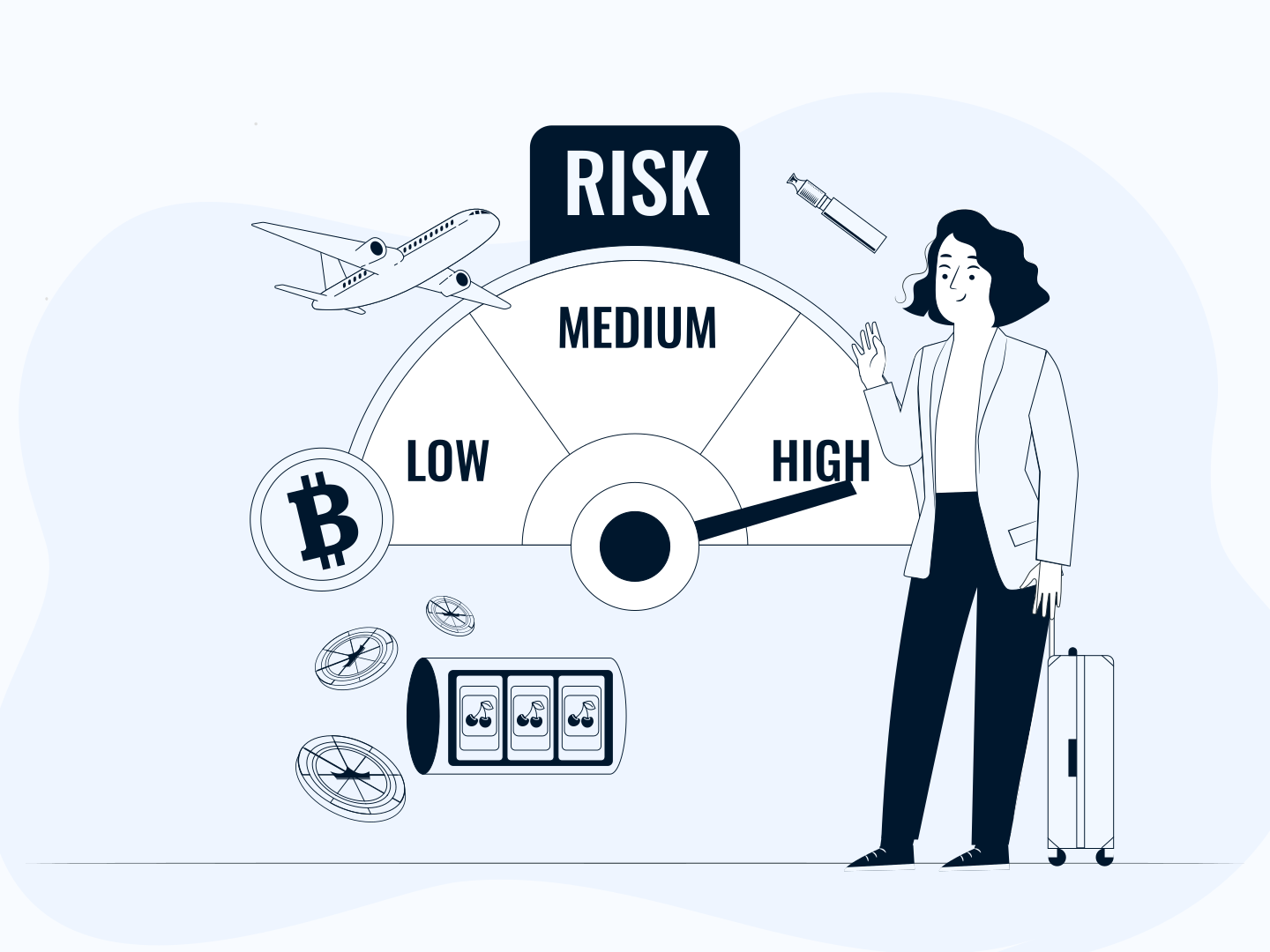
A high-risk merchant is a business that acquirers and card schemes see as more likely to cause chargebacks, fraud, regulatory problems or reputational damage. Common examples are adult content, gambling, dating, nutraceuticals, CBD, vapes and subscriptions.
High transaction values, rapid growth or a history of chargebacks can also make an otherwise ordinary business high risk. See our guide to high-risk industries and high-risk vs low-risk merchant accounts.
Why payment aggregators freeze high-risk accounts
PayPal, Stripe, Venmo and Square work as payment aggregators or payment facilitators. Instead of each merchant getting its own merchant account after full underwriting, the platform signs merchants up under its own relationship with the card schemes and banks, often within minutes.
That model is fast because most of the checking happens after you start selling. The platform carries the risk of every merchant under its umbrella, and its own banking partners set limits on what it can accept. When a review finds a business in a prohibited or restricted category, or chargebacks start to climb, the platform’s simplest option is to protect itself: limit the account, delay payouts, hold a reserve or close the account.
For a high-risk business, that usually happens at the worst moment, when volume is growing. Recurring billing businesses are hit hardest, because renewals stop going through and customers lose access.
PayPal and high-risk merchants
A personal PayPal account isn’t a merchant account. To accept payments as a business, you must follow PayPal’s User Agreement and Acceptable Use Policy.
At the time of writing, PayPal’s Acceptable Use Policy:
- prohibits transactions involving “certain sexually oriented materials or services”;
- requires pre-approval for a list of activities that includes gambling, gaming, prize draws and contests, digital currency and cryptocurrency, prescription items, telemedicine, mature audience content, online dating, live streaming, file-sharing, alcohol, tobacco, medical items and services, multilevel marketing and marketplaces. PayPal says this list isn’t exhaustive.
PayPal states that breaking its Acceptable Use Policy is a breach of its User Agreement, which sets out the actions PayPal can take, including limiting accounts. In short, many high-risk businesses either can’t use PayPal or need PayPal’s explicit approval first, and approval isn’t guaranteed.
Stripe and high-risk merchants
Stripe publishes a Prohibited and Restricted Businesses list with two tiers: prohibited businesses, which can’t use Stripe, and restricted businesses, which need additional due diligence and Stripe’s explicit prior approval.
At the time of writing, Stripe’s list includes:
| Industry | Stripe’s list |
|---|---|
| Adult content and services | Prohibited, including AI-generated adult content |
| Gambling, lotteries, sports betting and paid skill tournaments with prizes | Prohibited |
| Cannabis products and dispensaries | Prohibited |
| CBD with negligible THC within local limits | Restricted |
| Online dating and matchmaking | Restricted, and prohibited in some countries |
| Tobacco and e-cigarettes sold in line with the law | Restricted |
| Nutraceuticals that are unsafe or make harmful claims | Prohibited |
Stripe says it reviews every account at activation and that this review ultimately decides whether a business is supported. It also says an account may be restricted because of legal, regulatory or financial partner obligations. Some prohibitions differ by country, so check the current list for where you operate. Our post on NSFW businesses on Stripe covers the adult rules in more detail.
Venmo and high-risk merchants
Venmo, owned by PayPal, started as a peer-to-peer payment app for people in the US. It now offers business profiles, but it remains designed for smaller, domestic US transactions rather than high-volume or international sales.
Venmo business profiles are subject to Venmo’s User Agreement and an acceptable use policy in line with PayPal’s, so the same kinds of high-risk activities are prohibited or need approval. Venmo isn’t a practical option for most high-risk merchants, especially outside the US.
Square and high-risk merchants
Square works well for many low-risk shops and restaurants. Its terms, however, list a long set of unsupported industries. At the time of writing, these include:
- adult entertainment oriented products or services, in any medium;
- escort services;
- betting, including lottery tickets, sports gambling, casino chips and wagers at races;
- internet, mail order or telephone order sales of age-restricted products such as tobacco;
- internet, mail order or telephone order pharmacies.
Square’s terms also let it decline or refund transactions, delay payouts or restrict access to funds during an investigation, require a reserve, and suspend or terminate the service, including for excessive chargebacks.
So can PayPal, Stripe, Venmo or Square close my account?
Yes. Each platform’s terms allow it to restrict or close accounts and to delay or hold funds in certain circumstances, and a business that falls into a prohibited or restricted category is the most likely to be affected. That’s why we don’t recommend building a high-risk business on these platforms.
Even if you’re accepted at first, it is your responsibility to stay within their policies. In high-risk industries, where products, markets and regulations change often, that is hard to guarantee.
What a dedicated high-risk merchant account changes
| Payment aggregator (PayPal, Stripe, Venmo, Square) | Dedicated high-risk merchant account | |
|---|---|---|
| Onboarding | Minutes; most checks happen after you start selling | Underwriting before you go live |
| High-risk industries | Often prohibited or need special approval | Accepted by acquirers that work with your industry |
| Your own merchant ID | Usually not; you sit under the platform’s account | Yes, with your own merchant ID and the right MCC |
| Fees | Simple published pricing for supported businesses | Higher, reflecting the risk, and negotiable |
| Reserves | Can be imposed after problems appear | Agreed up front, as a rolling reserve or cap |
| Stability | Risk of sudden limits if your business doesn’t fit the policy | Your business model is declared and accepted from the start |
A dedicated account isn’t cheaper, and it takes longer to set up. What it gives you is an acquirer that knows what you sell before you go live, registers you correctly with the card schemes, and sets up reserves and controls to match.
How to move from an aggregator to a high-risk merchant account
- Gather your documents: company documents, ID for directors and owners, bank statements and recent processing statements. See our requirements checklist.
- Get your website ready: clear terms, refund and cancellation policies, contact details and, for adult businesses, age verification. Our guide to website requirements explains what acquirers check.
- Be transparent about what you sell and where. Miscoding a high-risk business breaks card scheme rules.
- Keep your current setup running until the new account is live, then move volume over.
- Keep chargebacks low from day one. Our guide to preventing chargebacks shows how.
Frequently asked questions
Can a high-risk merchant use PayPal?
Sometimes, but not freely. PayPal’s Acceptable Use Policy prohibits certain sexually oriented materials or services, and requires pre-approval for activities such as gambling, mature audience content, online dating, tobacco and cryptocurrency. Approval isn’t guaranteed.
Does Stripe work with high-risk businesses?
Only some. Stripe prohibits adult content and services, gambling and cannabis, and requires explicit approval for restricted categories such as online dating, low-THC CBD and tobacco.
Can Square be used for high-risk businesses?
Square’s terms list adult entertainment, escort services, betting and remote sales of age-restricted products such as tobacco among its unsupported industries, so most high-risk merchants can’t use it.
Is Venmo suitable for high-risk merchants?
Generally not. Venmo business profiles are designed for smaller US transactions and follow an acceptable use policy similar to PayPal’s, so high-risk activities are restricted or prohibited.
Why do payment platforms freeze high-risk accounts?
Aggregators onboard merchants quickly and check them afterwards. When a review finds a prohibited or restricted business, or chargebacks rise, they can limit the account, delay payouts, hold funds or close it to protect themselves and their banking partners.
What is the alternative to PayPal and Stripe for high-risk merchants?
A dedicated high-risk merchant account from a provider whose acquiring partners accept your industry. It takes longer to set up and costs more, but your business is underwritten and accepted before you go live.
Next step
If your business is high risk, it’s better to start on a payment setup that’s built for it than to wait for a platform to limit your account. Fasto works with adult, subscription, nutraceutical, gaming, dating and hospitality merchants. Approval typically takes two to three weeks.
Get a free, no-obligation quote for a high-risk merchant account.