Every business that accepts card payments is placed somewhere on a risk scale by the acquirer that processes its payments. Most shops and service businesses are low risk and get a standard merchant account quickly. Others are classed as high risk, and the process, the costs and the conditions are very different.
This guide explains the difference between high-risk and low-risk merchant accounts, what puts a business in each category, what changes for you as a high-risk merchant, and what you can do to lower your risk profile.
Key takeaways
- Acquirers class a business as high risk when its payments are more likely to lead to chargebacks, fraud, regulatory problems or reputational damage for the card schemes.
- Industry is the biggest factor, but transaction size, business model, trading history, chargeback history and where you sell also count.
- Low-risk merchant accounts are usually quick to open, with lower fees and no reserve.
- High-risk merchant accounts need detailed underwriting and usually come with higher fees, a rolling reserve and sometimes processing limits.
- You can’t change your industry, but you can lower your risk profile with good controls, clear policies and low dispute rates.
What is the difference between a high-risk and a low-risk business?
A low-risk business sells products or services with few disputes, little fraud and little regulation, usually at modest transaction values, with a stable trading history. A typical example is a local shop or a straightforward online store.
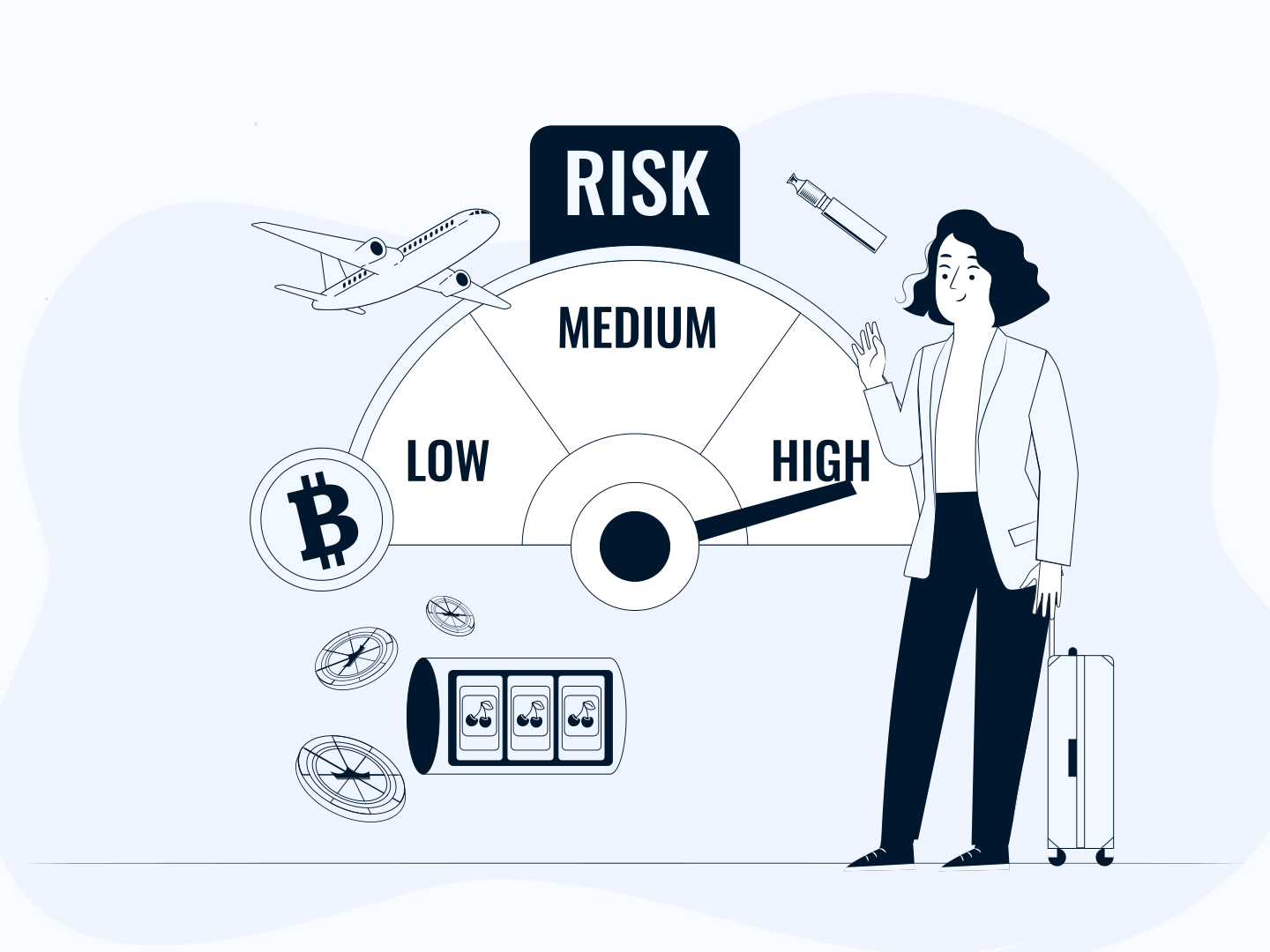
A high-risk business has one or more features that make losses more likely for the acquirer: an industry with high chargeback or fraud rates, products that are regulated or age-restricted, delivery long after payment, subscriptions, high transaction values, or no trading history. The acquirer is liable for chargebacks its merchants can’t cover, so it prices and manages that risk.
High-risk vs low-risk merchant accounts at a glance
| Low-risk merchant account | High-risk merchant account | |
|---|---|---|
| Who offers it | Most banks, payment service providers and payment platforms | Specialist providers and acquirers that accept high-risk categories |
| Application | Short, often largely automated | Detailed underwriting: documents, website review, processing history, owners |
| Card scheme registration | Not usually needed | Needed for some categories, such as adult content, dating, gambling and pharmacies |
| Fees | Lower | Higher, reflecting the extra risk |
| Rolling reserve | Rare | Common, especially at the start |
| Processing limits | Rare | Common for new merchants |
| Monitoring | Standard | Closer monitoring of chargebacks and fraud |
| Risk of sudden closure | Low | Higher with providers that don’t specialise in your industry |
What is a low-risk merchant account?
Application
Low-risk merchants can usually open an account with basic company and identity information. Many payment platforms approve low-risk businesses within days, and some almost instantly, because their models are built for predictable, low-dispute sales.
Fees
Fees are lower and simpler, and there is usually no reserve. The trade-off is that these platforms often have strict lists of prohibited and restricted businesses, and they may close accounts that turn out to be higher risk than declared.
What is a high-risk merchant account?
A high-risk merchant account is an agreement with an acquirer that is willing to process payments for businesses in higher-risk categories, under conditions that cover that risk.
Application
Expect the acquirer to review your business model, website, owners, finances and previous processing statements. For some categories, it also has to register you with the card schemes. Our guide to getting approved for a high-risk merchant account explains the process.
Fees and conditions
- Higher processing fees, reflecting the acquirer’s extra exposure.
- A rolling reserve: a share of each settlement held back and released later, or an upfront reserve paid at the start.
- Higher chargeback fees than on standard accounts.
- Processing volume limits, raised as you build history.
Are you a high-risk merchant?
You are likely to be treated as high risk if one or more of these apply:
- you are in a category the card schemes watch closely, such as adult content, dating, gambling, nutraceuticals, CBD, vapes or travel (see our list of high-risk industries);
- you sell subscriptions or free trials that turn into paid plans;
- you take payment long before you deliver;
- your average transaction value is high;
- you sell internationally, or to customers in many countries;
- you are a new business with no processing history;
- you have had high chargeback rates or an account closed in the past.
Startups have no financial or operational track record, which makes them higher-risk in the eyes of most acquirers. It’s the same as general banking in that if you want to borrow money and you have no financial history to show, they’ll want to see more information to ensure you’re a responsible borrower. In this case, as a startup, you’ll need to provide business plans, cash flow forecasts, and a lot of financing information, etc. You should be prepared to provide more detailed information in general.
Dennis E.R. Pedersen, CEO and Founder of FastoPayments

Why a mainstream platform may not be the answer
Many high-risk merchants start on a mainstream payment platform because it is quick to sign up. The risk is that these platforms list many high-risk categories as prohibited or restricted, and can freeze funds or close accounts when they notice. If your business is in a high-risk category, it is safer to be open about it from the start and work with an acquirer that accepts it. Our guide on using mainstream platforms as a high-risk merchant covers this in more detail.
Can you reduce your risk as a merchant?
You can’t change your industry, but you can change how risky your business looks:
- Keep chargebacks low. Clear descriptors, easy refunds and fast customer support stop many disputes. See our guide to preventing chargebacks.
- Use fraud controls. 3D Secure, fraud screening and card-testing protection lower fraud reports.
- Make your website clear. Company details, terms, refund and cancellation policies, and age verification where required.
- Be transparent about recurring billing. State payment terms clearly at checkout and in every receipt.
- Build a track record. A clean processing history is the best argument for lower fees and a smaller reserve.
Subscription model businesses are at higher risks for chargebacks because people forget they’re subscribed and want to dispute the charge. If you offer subscription-based products or services, we recommend clearly stating your payment policies on your website, in your invoices, and across all other customer touch points to ensure customers know what to expect. This can help prevent chargebacks before they occur.
Dennis E.R. Pedersen, CEO and Founder of FastoPayments
Frequently asked questions
What is the difference between a high-risk and a low-risk merchant account?
A low-risk merchant account is quick to open, with lower fees and usually no reserve. A high-risk merchant account involves detailed underwriting and usually comes with higher fees, a rolling reserve and closer monitoring, because the acquirer takes on more risk.
What makes a business high risk?
Mainly the industry, but also subscriptions or free trials, delayed delivery, high transaction values, international sales, no trading history and past chargeback problems.
Why are high-risk merchant accounts more expensive?
The acquirer is liable for chargebacks and losses its merchants can’t cover, and some categories need card scheme registration and extra monitoring. Higher fees and reserves cover that risk.
Can a high-risk business use a low-risk payment platform?
Sometimes, but many mainstream platforms prohibit or restrict high-risk categories and can freeze funds or close accounts. It is safer to work with an acquirer that accepts your category from the start.
Can a high-risk merchant become low risk?
Your industry classification usually stays the same, but a clean processing history, low chargebacks and good controls can lead to better terms, such as lower fees and a smaller reserve.
Is a startup a high-risk merchant?
Often, yes. Without processing history, acquirers see more uncertainty, so they ask for business plans and cash flow forecasts and may start with a reserve or processing limits.
Next step
If your business is in a high-risk category, the right acquirer matters more than the cheapest rate. Fasto works with adult, subscription, nutraceutical, gaming, dating and hospitality merchants. Approval typically takes two to three weeks.
Get a free quote and tell us about your business.